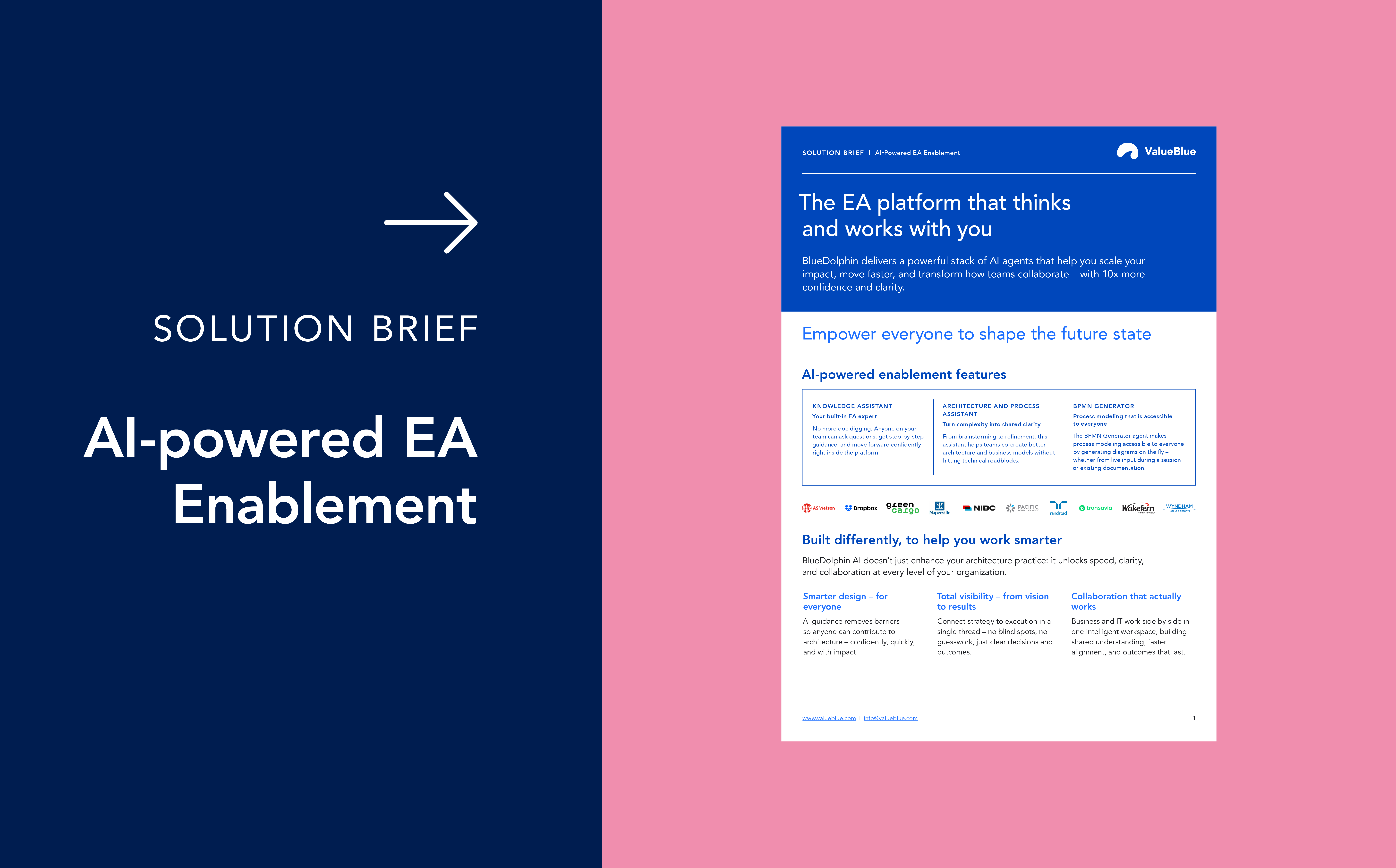
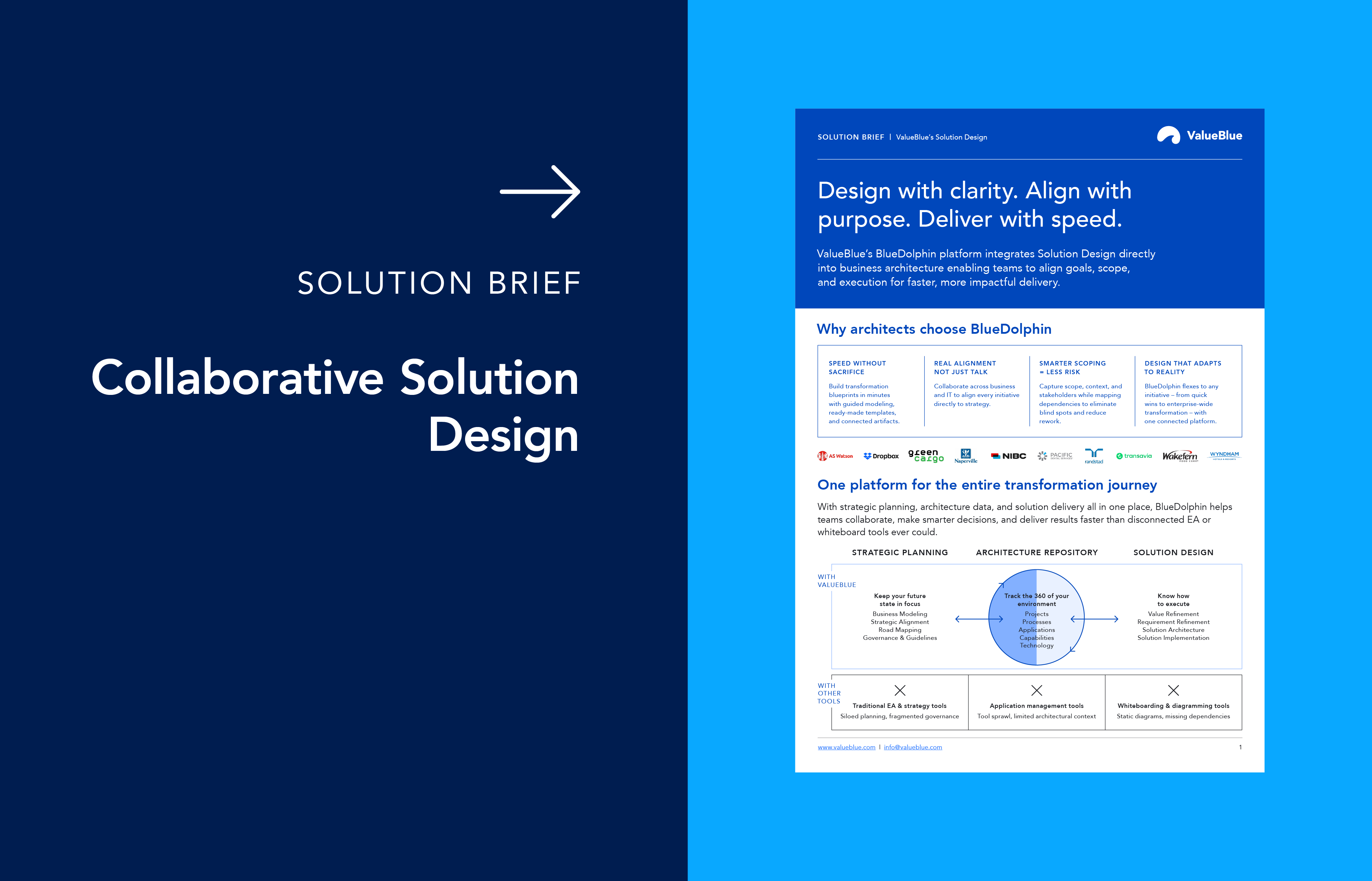
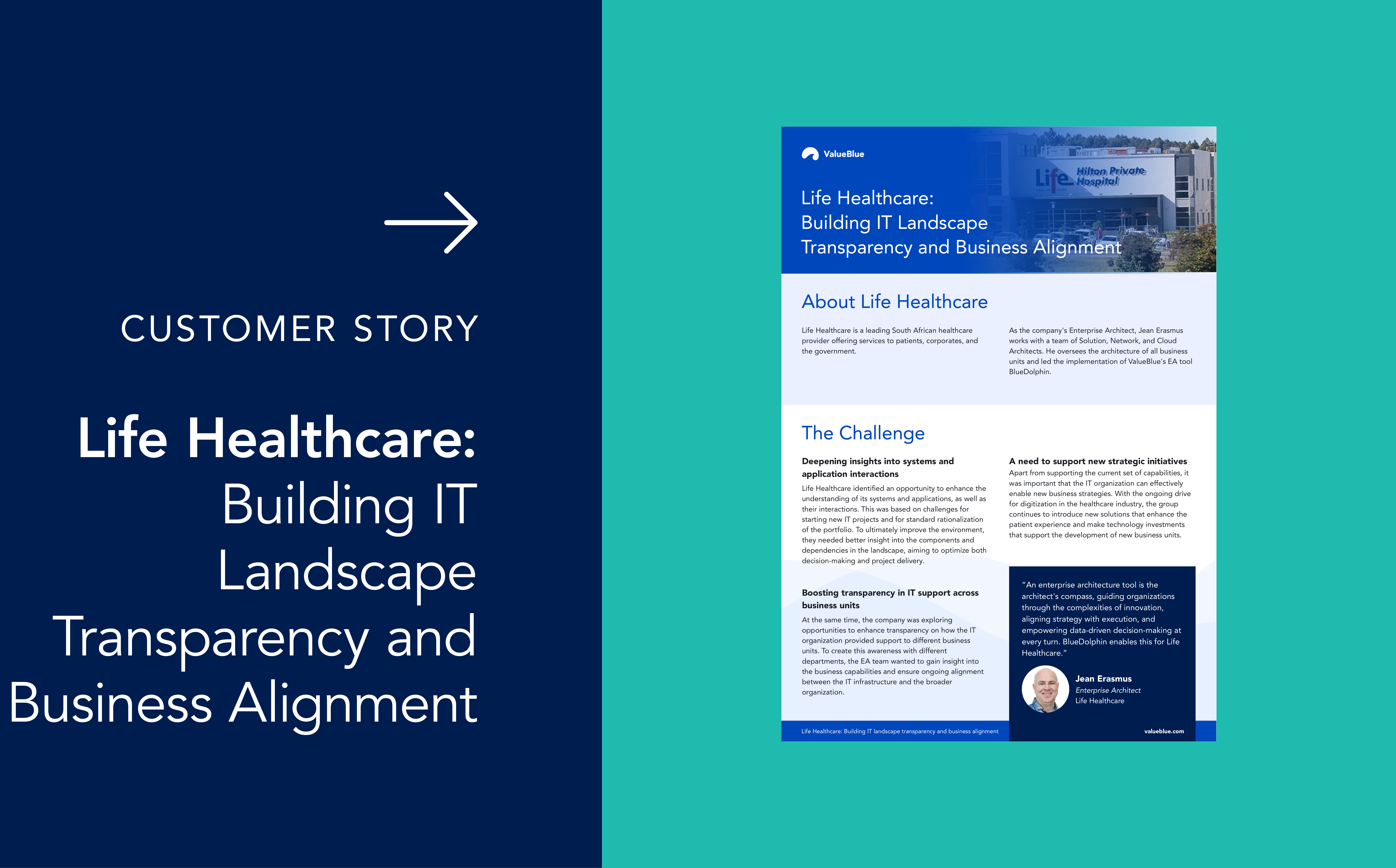

Strategic planning is meant to provide clarity and direction. Yet for many organizations, it remains disconnected from execution, living in slide decks, spreadsheets, and static documents that struggle to keep pace with change.
For Enterprise Architecture (EA) leaders, this gap is especially visible. Architecture teams are often asked to support transformation initiatives, prioritize investments, and guide delivery decisions, all while strategic intent remains fragmented across the organization.
In this guide, we explore how effective strategic planning works in practice, why Enterprise Architecture plays a central role, and how organizations can move from intent to execution using concrete, repeatable deliverables.
Table of Contents
What is strategic planning and how does it work?
Strategic planning and Enterprise Architecture
Why strategic planning breaks down in practice for Enterprise Architecture leaders
What strategic planning is not and why it matters
Strategic planning vs tactical planning
The core building blocks of effective strategic planning
Key strategic planning deliverables Enterprise Architecture leaders rely on
How BlueDolphin supports strategic planning
What Enterprise Architecture leaders can do now to improve strategic planning
What is strategic planning and how does it work?
Strategic planning is a systematic process by which an organization defines its long-term direction and determines how to align capabilities, resources, and priorities to achieve that direction. It is about turning intent into informed, coordinated action.
A practical way to think about strategic planning is as a GPS for the organization. It provides orientation, helps teams navigate constraints, and adapts as conditions change. Unlike a printed map, a GPS responds to actual movement, recalculating the route as reality unfolds. Rather than producing a static plan, strategic planning supports ongoing decision-making across the enterprise.
Effective strategic planning requires organizations to answer 4 essential questions:
1. Where are we today?
This starts with an honest view of the current state. Organizations need clarity on their business capabilities, operating model, and constraints. Without this baseline, strategic decisions are built on assumptions rather than facts.
2. Where do we want to go?
Strategic objectives define the future direction of the organization. These objectives should describe meaningful outcomes and provide enough focus to guide priorities and trade-offs, while remaining flexible as the environment evolves.
3. How do we get there?
Strategic intent must be translated into action. This involves prioritizing initiatives, sequencing change, and allocating resources in a way that reflects both strategic importance and organizational capacity. Roadmaps help make this path visible and shared.
4. How do we adapt along the way?
Strategy does not end with planning. Progress must be monitored, risks managed, and adjustments made as new information emerges. Feedback loops ensure that execution remains aligned with intent over time.
For Enterprise Architecture leaders, strategic planning is not theoretical. It directly influences how architecture is shaped, how investments are evaluated, and how change is governed across the organization. When done well, strategic planning provides clear benefits, including better alignment, improved prioritization, and greater confidence in decision-making.
Strategic planning and Enterprise Architecture
Strategic planning and Enterprise Architecture are closely intertwined. Strategic planning defines the direction an organization intends to take and the outcomes it wants to achieve. Enterprise Architecture provides the structure needed to understand what must change in order to get there. From an Enterprise Architecture perspective, clarity around what strategic planning is and its objectives enables architecture decisions to remain aligned with long-term business goals rather than short-term delivery pressures.
Enterprise Architecture offers a coherent view of the organization, spanning goals, business processes, applications, data, systems, and capabilities. This perspective makes it possible to evaluate strategic ambition against operational and technical reality. Without that grounding, strategy risks becoming aspirational rather than executable.
When strategic planning and Enterprise Architecture are not aligned, familiar problems begin to surface. Plans and roadmaps drift apart, architectural constraints are overlooked, and it becomes increasingly difficult to understand how individual initiatives contribute to strategic objectives or deliver meaningful outcomes.
Common challenges in disconnected environments include:
- Plans that ignore architectural realities, resulting in initiatives that underestimate dependencies, technical constraints, or organizational capacity.
- Architecture roadmaps that lack strategic relevance, evolving independently of business priorities and gradually losing their value as decision-making tools.
- Limited traceability between goals, initiatives, and outcomes, making it difficult to assess whether investments are advancing strategy or simply increasing activity.
When strategic planning and Enterprise Architecture are connected, EA becomes a powerful enabler of strategy execution. Architecture shifts from a supporting role to a strategic one, helping the organization make informed trade-offs and sustain alignment as change unfolds.
Enterprise Architecture leaders play a critical role in closing the loop between planning and execution. They do this by grounding strategy in business capabilities rather than organizational structures, making dependencies and constraints visible early, and enabling clear traceability from strategic objectives to initiatives. Through governance and shared insight, EA leaders help ensure that decisions made at every level remain aligned with the organization’s strategic intent over time.
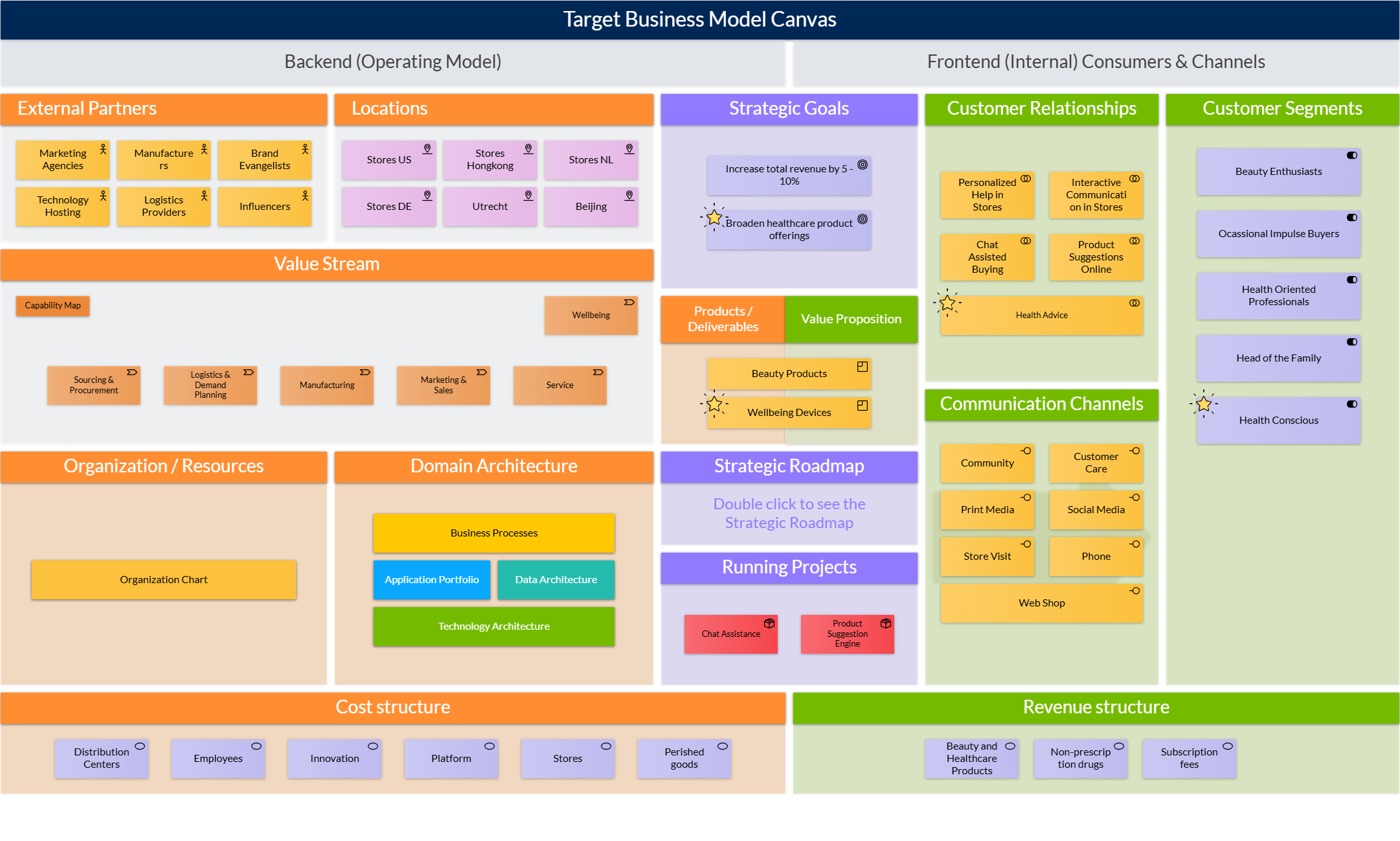
One practical way Enterprise Architecture supports strategic planning is by making strategic intent visible across the operating model, as illustrated in a target business model canvas:
Why strategic planning breaks down in practice for Enterprise Architecture leaders
Most organizations do have a strategy, and often a thoughtful one. What is far less clear is how that strategy becomes shared, actionable, and controllable across the enterprise.
The challenge is rarely the absence of intent. More often, it is the absence of a common language. Strategic objectives are discussed at a high level, but different parts of the organization interpret them differently. Initiatives move forward based on local priorities. Architecture teams see gaps and dependencies, but struggle to make those insights land in a way that influences decisions.
This is where strategic planning often begins to break down in practice. Not because strategy itself is flawed, but because the mechanisms for translating strategic intent into shared, executable guidance are weak or absent.
When this translation layer is missing, breakdowns tend to appear in familiar ways:
- Strategic priorities evolve, but roadmaps remain fixed.
- Business goals are articulated, but not defined in measurable terms.
- Architecture artifacts drift as delivery pressures take over.
- Transformation activity increases, while strategic outcomes remain unclear.
Without structure, strategic discussions tend to stay abstract and difficult to operationalize. Decisions are made in isolation, trade-offs are poorly understood, and alignment erodes over time.
Enterprise Architecture does not replace strategic planning. Instead, it provides the structural and analytical layer that allows strategic planning to function effectively at scale. By establishing shared definitions, consistent models, and clear links between strategy and execution, EA helps turn strategic intent into something the organization can actually work with. Rather than redefining strategy, EA enables it to be expressed clearly, tested against reality, and sustained through execution.
Seen this way, strategic planning is not about fixing strategy. It is about making strategy understandable, actionable, and governable across the enterprise.
What strategic planning is not and why it matters
Strategic planning is often misunderstood, particularly in organizations where it has historically been treated as a periodic or executive-only exercise. Clarifying what strategic planning is not helps set the right expectations and avoid common pitfalls.
Not a one-time exercise
Strategic planning is ongoing. As organizations learn, markets shift, and constraints change, strategy must be revisited and adjusted. A plan that cannot evolve quickly loses relevance.
Not just a theoretical activity
Strategy must connect directly to execution. If planning does not influence what gets funded, built, or changed, it becomes disconnected from the reality of how the organization operates.
Not limited to executives
While senior leadership sets direction, effective strategic planning involves stakeholders across both business and IT. Broad engagement improves alignment and increases the likelihood that the strategy can be executed successfully.
Not a static document
Strategy should not live in a slide deck that is reviewed once a year. It requires continuous attention, regular review, and refinement as progress is made and new information emerges.
Not separate from daily operations
Strategic planning shapes everyday decisions. It influences investment priorities, architecture choices, delivery sequencing, and governance practices across the organization.
Strategic planning vs tactical planning
It is important to distinguish strategic planning from tactical planning because both play essential but different roles in how an organization turns vision into results.
Strategic planning defines long-term direction and priorities. It sets the destination: where the organization is headed, what success looks like, and the principles that guide decision-making across business units and time horizons. Strategic plans are inherently directional and outcome-focused, helping leaders evaluate whether investments and initiatives are aligned with overarching goals.
In contrast, tactical planning focuses on the specific actions, tasks, and short-term decisions required to execute against that direction. Tactics are about how work gets done; sequencing activities, allocating resources, assigning accountabilities, and adjusting in real time to risks and opportunities. Tactical plans are typically more detailed, time-bound, and operationally grounded than strategic plans.
Both levels of planning are necessary, but they serve different audiences and cadences. Strategic planning shapes why and what, while tactical planning shapes how and when.
For more on how these concepts differ in practice, especially in the context of architecture functions, read this article on strategic vs tactical planning in Enterprise Architecture.
The core building blocks of effective strategic planning
Many leaders ask for a step-by-step description of the strategic planning process, but in practice, effective strategic planning is better understood as a set of interconnected building blocks that evolve over time rather than as a rigid sequence of tasks. While organizations differ in maturity and context, effective strategic planning consistently includes three interconnected building blocks. Each delivers value on its own, but together they form a complete planning system.
1. Establishing the strategic foundation
This first building block focuses on creating the conditions for strategic success.
Key activities typically include:
- Establishing a clear strategy development organization and governance model
- Defining mission, vision, and core values
- Setting guiding principles for Enterprise Architecture and decision-making
- Describing the current business using shared models
- Defining how success will be measured
For EA leaders, this phase is where structure replaces ambiguity. Capability models, business model canvases, and shared definitions create a common language that aligns stakeholders from the outset.
Without this foundation, strategic discussions tend to remain abstract and difficult to operationalize.
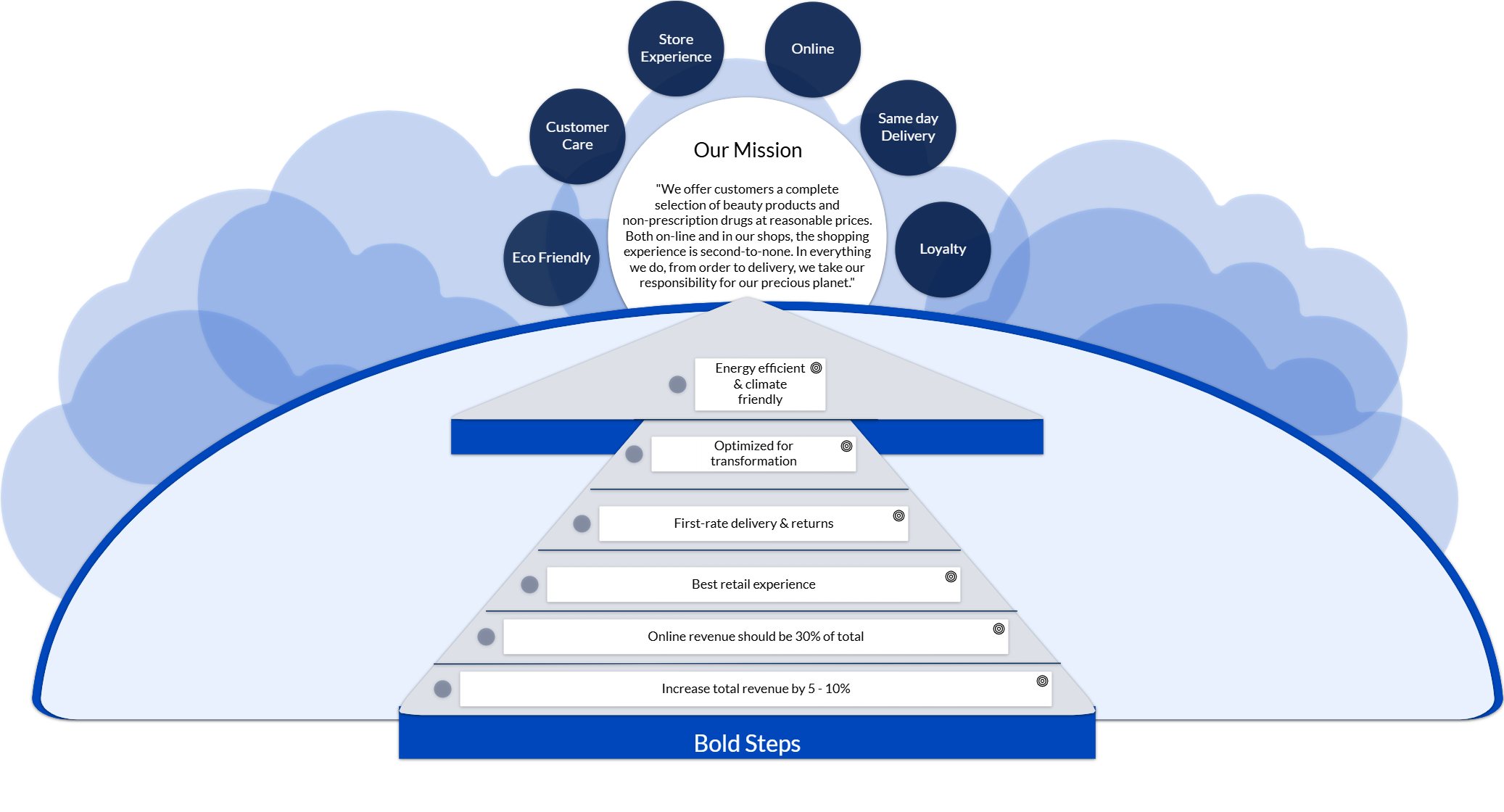
Strategic foundations are often expressed visually to create shared understanding, linking vision and mission to concrete strategic outcomes.
2. Developing the strategy
Once direction and governance are in place, strategic intent must be translated into actionable plans.
This building block focuses on:
- Clarifying strategic objectives across financial, customer, operational, and organizational perspectives
- Visualizing cause-and-effect relationships between objectives
- Assessing current capabilities against future needs
- Identifying gaps, risks, and dependencies
- Prioritizing initiatives and sequencing change over time
This is where strategy moves beyond aspiration. By grounding objectives in capabilities and measurable outcomes, organizations gain a clearer view of where to invest and why.
3. Managing transformation and execution
Strategy only delivers value when it is executed and sustained.
This building block ensures that strategic intent remains connected to delivery by focusing on:
- Stakeholder alignment and engagement
- Coordinating initiatives across teams and portfolios
- Tracking progress against defined objectives and KPIs
- Monitoring outcomes and managing exceptions
- Closing feedback loops to inform the next planning cycle
For EA leaders, this phase maintains alignment as the organization evolves – ensuring that architecture, delivery, and strategy remain in sync.
Key strategic planning deliverables Enterprise Architecture leaders rely on
Discussions about what strategic planning is in an organization, with examples, typically focus on the tangible deliverables that make strategy visible, actionable, and measurable in day-to-day decision-making. These deliverables create a shared reference point for alignment and governance across the organization, rather than serving as one-off planning outputs. These artifacts are not static; they evolve as strategy and execution progress.
Capability models
Capability models describe what the business does, independent of organizational structure, people, or systems. More importantly, they provide a way to give strategy a shared, unambiguous language that can be understood and used across the enterprise.
From a strategic planning perspective, capability models are not just an EA artifact. They are the means by which strategic intent is translated into something concrete. Strategy often starts with broad ambitions and high-level objectives. Capability models make those ambitions discussable and comparable by expressing them in terms of the abilities the organization must have, improve, or transform in order to succeed.
This is why capability models play such a central role in connecting strategy and execution. They establish a stable reference point that allows leaders to move from abstract goals to practical decisions. Strategy can be expressed in terms of which capabilities matter most, where strengths already exist, and where targeted change is required. That same language then continues into execution, where capabilities are realized through processes, systems, and initiatives across business and IT.
In practice, capability models support strategic planning by enabling EA leaders to:
- Anchor strategic discussions in business reality rather than organizational structures.
- Create a shared language that connects strategy, business, and IT.
- Identify where change will create the greatest strategic impact.
- Support assessments, prioritization, and investment decisions consistently.
By installing this common language early, Enterprise Architecture helps ensure that strategy does not fragment as it moves into execution. Capability models enable tracing strategic intent through to delivery decisions while preserving clarity and alignment across the organization.
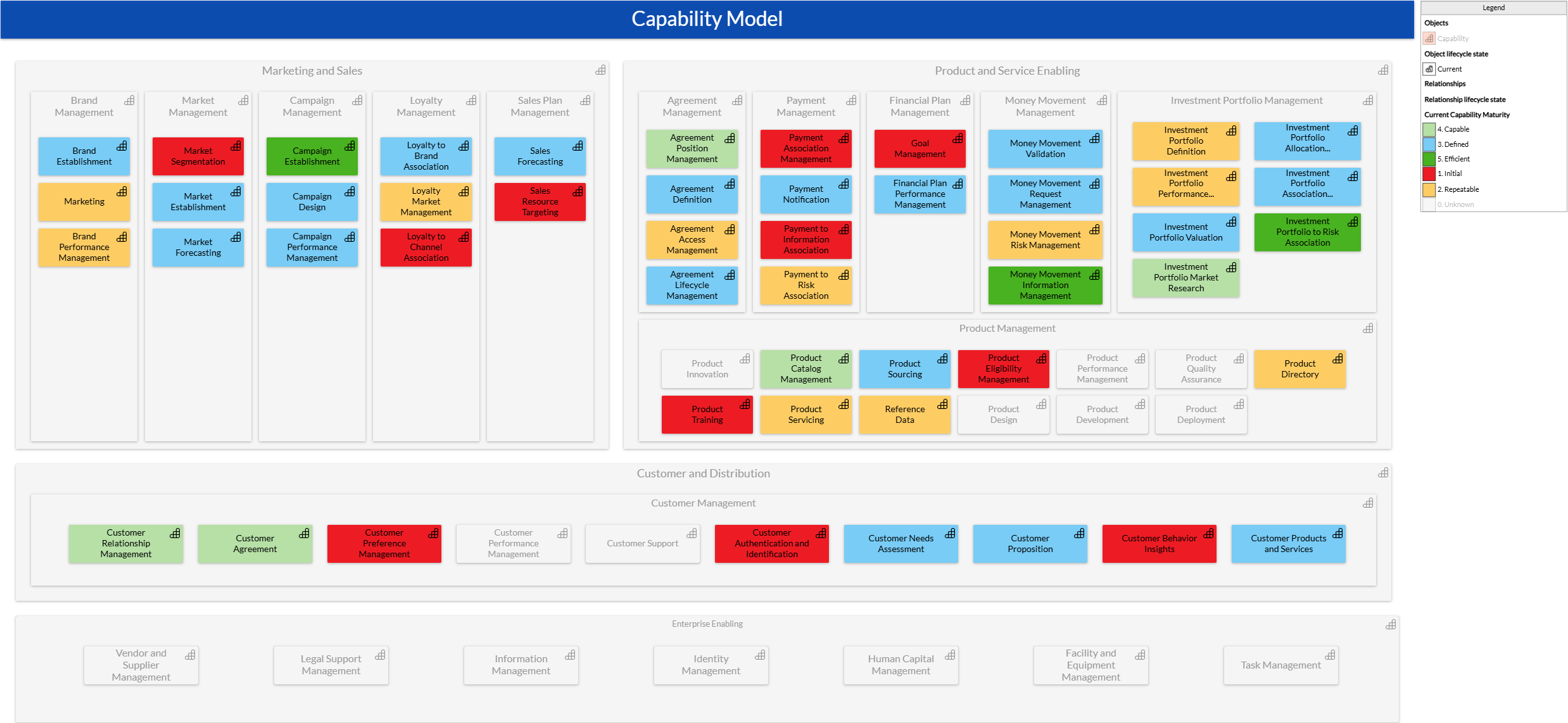
A capability model provides a structured, enterprise-wide view of what the organization must be able to do to execute its strategy:
Strategy maps
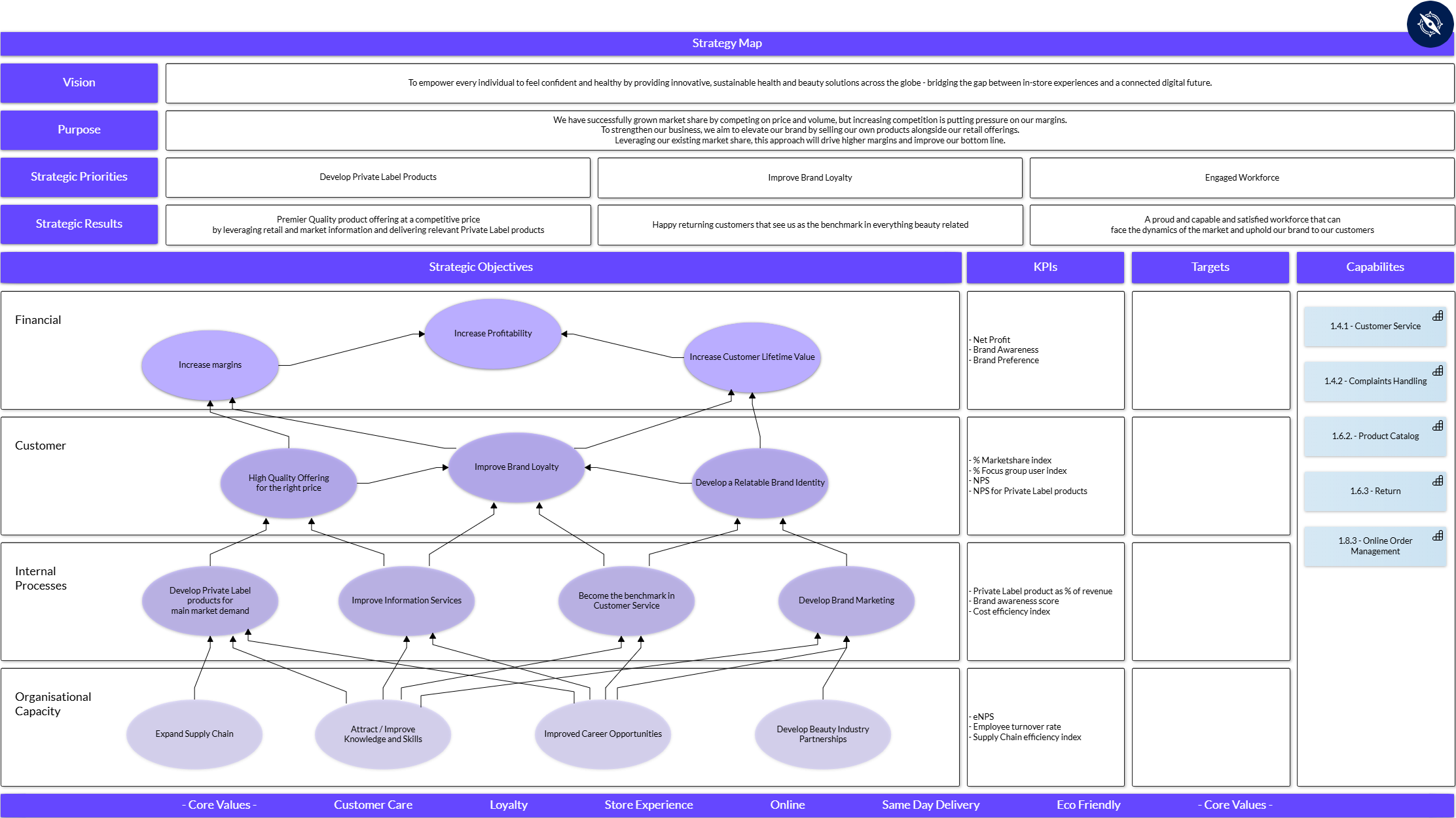
Strategy maps translate strategic intent into a structured set of objectives across multiple perspectives, commonly including financial performance, customer outcomes, internal processes, and organizational capacity. Their primary value lies in making strategy explicit and coherent rather than aspirational.
By visualizing cause-and-effect relationships among objectives, strategy maps help organizations understand how different goals reinforce one another and where trade-offs may exist. They provide a way to express strategy as a system rather than a collection of disconnected priorities.
For Enterprise Architecture leaders, strategy maps serve as an important bridge between strategic intent and capability-based planning. When objectives are mapped clearly, EA teams can assess which capabilities are most critical to achieving strategic outcomes and where architectural change will have the greatest impact. This creates a shared reference point that aligns strategic conversations across business and technology stakeholders.
Strategy maps make cause-and-effect relationships explicit by linking objectives across financial, customer, operational, and organizational perspectives:
Balanced scorecards and KPIs
Balanced scorecards translate strategic objectives into measurable performance indicators. They provide a structured way to assess whether the strategy is being realized in practice, rather than assumed based on activity alone.
By defining and tracking Key Performance Indicators (KPIs), organizations gain visibility into progress, risk, and emerging gaps. Scorecards help distinguish initiatives that move the organization closer to its objectives from those that consume resources without delivering meaningful outcomes.
For Enterprise Architecture leaders, scorecards play a critical governance role. When performance indicators are connected to capabilities and strategic objectives, EA teams can support evidence-based prioritization and informed decision-making. This connection allows leaders to adjust investments and architecture roadmaps based on what is actually working, rather than relying on intuition or incomplete information.
Strategic roadmaps
Strategic roadmaps visualize how initiatives and capability improvements are expected to unfold over time. They translate strategy into a sequenced view of change that reflects both ambition and organizational capacity.
By distinguishing near term, mid-term, and longer-term actions, roadmaps help organizations manage complexity and avoid overcommitment. They make dependencies visible, support realistic planning, and provide a shared understanding of how different initiatives contribute to strategic goals.
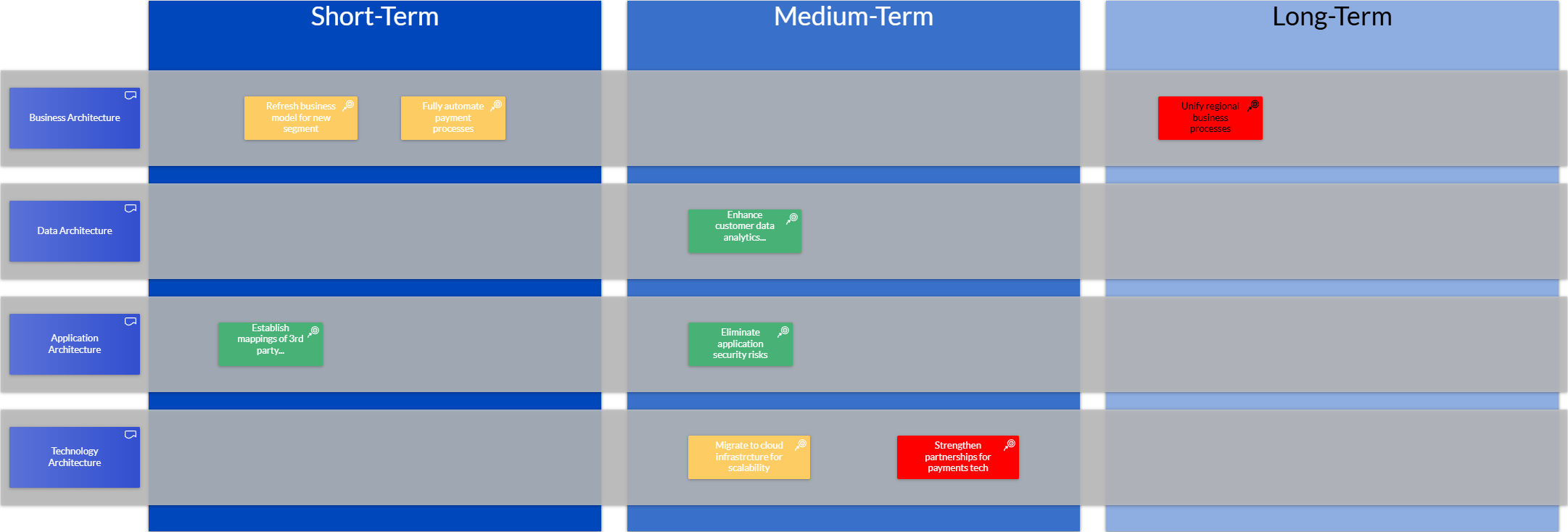
For EA leaders, strategic roadmaps connect planning and execution. They allow architecture teams to align capability development, technology evolution, and delivery timelines with strategic priorities, while maintaining flexibility as conditions change.
Dashboards and feedback mechanisms
Dashboards bring strategy, execution, and measurement together in a single view. By consolidating objectives, capabilities, initiatives, and performance indicators, they provide ongoing visibility into how strategy is progressing across the organization.
For Enterprise Architecture leaders, dashboards support continuous oversight rather than periodic review. They make it easier to identify misalignment, emerging risks, and areas where intervention may be required.
Feedback mechanisms ensure that strategic planning remains iterative rather than static. By capturing lessons learned and performance insights, organizations can refine objectives, adjust roadmaps, and improve decision-making over time. This continuous feedback loop helps ensure that strategic planning evolves alongside the organization, rather than falling behind it.
How BlueDolphin supports strategic planning
Enterprise Architecture platforms like BlueDolphin help EA leaders bring these deliverables together in a single, coherent planning environment.
By supporting visual models, shared repositories, and traceability across strategy, capabilities, and initiatives, BlueDolphin enables organizations to move beyond disconnected documents toward a more integrated approach to planning and execution.
Key characteristics include:
- Integration
Strategic planning components work together within one platform.
- Visibility
Complex strategies become clear through shared visual models accessible to stakeholders at any time.
- Traceability
Direct links connect strategic objectives to capabilities and change initiatives.
- Collaboration
Multiple stakeholders contribute using a common language and shared context.
- Measurement and iteration
KPIs and dashboards support continuous monitoring and improvement.
Rather than replacing strategic thinking, BlueDolphin provides the structure and transparency needed to sustain it over time.
What Enterprise Architecture leaders can do now to improve strategic planning
Organizations do not need a perfect planning model to improve outcomes. Practical steps EA leaders can take today include:
- Treat strategy as a living system, not a static deliverable.
- Anchor planning discussions in capabilities and outcomes.
- Improve traceability between objectives, investments, and execution.
- Create shared visibility across business and IT stakeholders.
- Build feedback loops that allow strategy to evolve with the organization.
Incremental improvements in how strategy is structured and managed can significantly improve alignment and execution.
See strategic planning for Enterprise Architecture in action!
Strategic planning becomes tangible when intent, capabilities, and execution are connected in practice.
Book a demo to see how BlueDolphin helps Enterprise Architecture leaders connect strategy, capabilities, and delivery – and maintain alignment as change unfolds.